
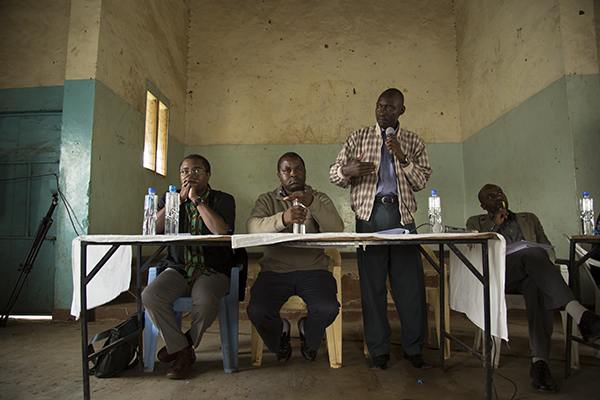
Korogocho Forum on Accountability and Justice
Following the announcement by the Chief Justice of the Republic of Kenya of his intention to establish an International Crimes Division of the Kenyan High Court, the Wayamo Foundation and Koch FM organised a forum with community leaders from Korogocho to discuss the idea of how to improve the access to justice and how to tackle those transnational crimes which affect the community. Korogocho is one of the largest slum neighbourhoods of Nairobi and was one of the areas affected by Kenya’s 2007-08 post-election violence. Speakers: Tom Mboya, Station Manager Koch FM, Paralegal Bobby Mkangi, Independent Legal Consultant Father John Webotsa, Father in Charge, St John’s Catholic Church Photos by Matthew Rhodes, Wayamo.
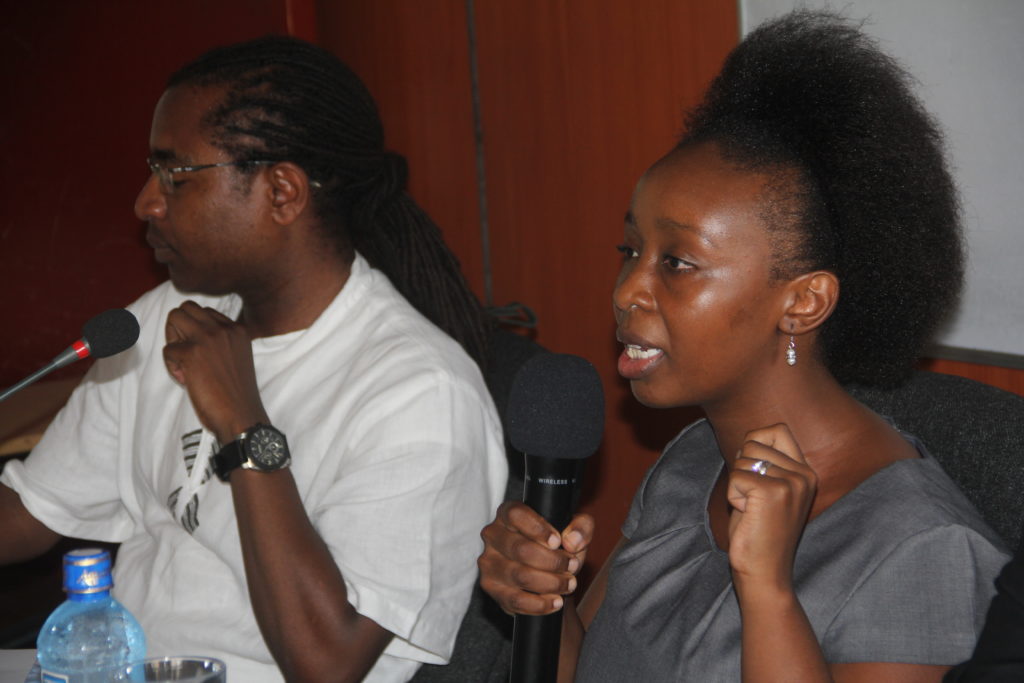
Mombasa Debate on Strengthening Complementarity and the IOCD
Following the announcement by Chief Justice Willy Mutunga of the intention to establish an International and Organised Crimes Division in the High Court of Kenya, the Wayamo Foundation in cooperation with the School of Law of the University of Nairobi in Mombasa organised a panel debate with speakers from the law faculty, the public prosecution office, and civil society. The panel discussion featured a range of opinions on complementarity and the establishment of the IOCD, and the audience asked questions and made comments throughout the moderated debate. Speakers: Dr. Sarah M. Kinyanjui, Coordinator, University of Nairobi, School of Law, Mombasa Campus Alexander M. Muteti, Principal State Counsel, Directorate of Public Prosecutions Bobby Mkangi, Independent Legal Consultant Click here for pictures.
Nairobi Public Debate on International Justice
On 12 February 2014, the Institute for War and Peace Reporting and the Wayamo Communication Foundation hosted a panel discussion on justice processes for mass crimes in Africa. (PROGRAMME) This was the sixth in a series of public debates hosted by IWPR and Wayamo under the ReportingKenya.net banner, and featured both Kenyan and international panellists including: Serge Brammertz, Prosecutor for the International Criminal Tribunal for the former Yugoslavia (ICTY) Macharia Gaitho, Managing Editor for Special Projects at Nation Media Group and Chair of the Kenya Editors’ Guild Charles Kanjama, Advocate of the High Court of Kenya Betty Kaari Murungi, Chairperson of Akiba Uhaki Foundation and Vice Chair of the Kenya Human Rights Commission Alex Whiting, Professor of Practice, Harvard Law School Invited, but unable to attend due to travel to The Hague along with Kenya’s Attorney General Githu Muigai: Evans Monari, Advocate of the High Court of Kenya; Partner, Daly & Figgis Advocates; former ICC counsel for Mohammed Hussein Ali. The panel discussion was open to the general public and began at 10h at the Strathmore University Auditorium. Moderator Bettina Ambach, Director of the Wayamo Foundation, invited the audience to ask questions and make comments throughout the debate. TOPICS: The
Public Debate in The Hague on Sitting Heads of State on Trial
On 26 November 2013, the Institute for War and Peace Reporting and the Wayamo Communication Foundation hosted an international panel discussion in The Hague featuring a range of opinions on the future of the International Criminal Court. The debate was held on the sidelines of the International Criminal Court’s Assembly of States Parties held between 20–28 November 2013 at the World Forum Convention Center in The Hague, The Netherlands. The panel discussion was moderated by IWPR Africa Editor Simon Jennings and was open to the general public and streamed live on ReportingKenya.net. SPEAKERS: Gerald Thompson, Ambassador, Ministry of Foreign Affairs of Trinidad & Tobago Sarah Nouwen, Faculty of Law at University of Cambridge David Donat Cattin, Senior Director, Parliamentarians for Global Action Njonjo Mue, Kenyan Transitional Justice Expert Photos by Kioko Kivandi, IWPR.
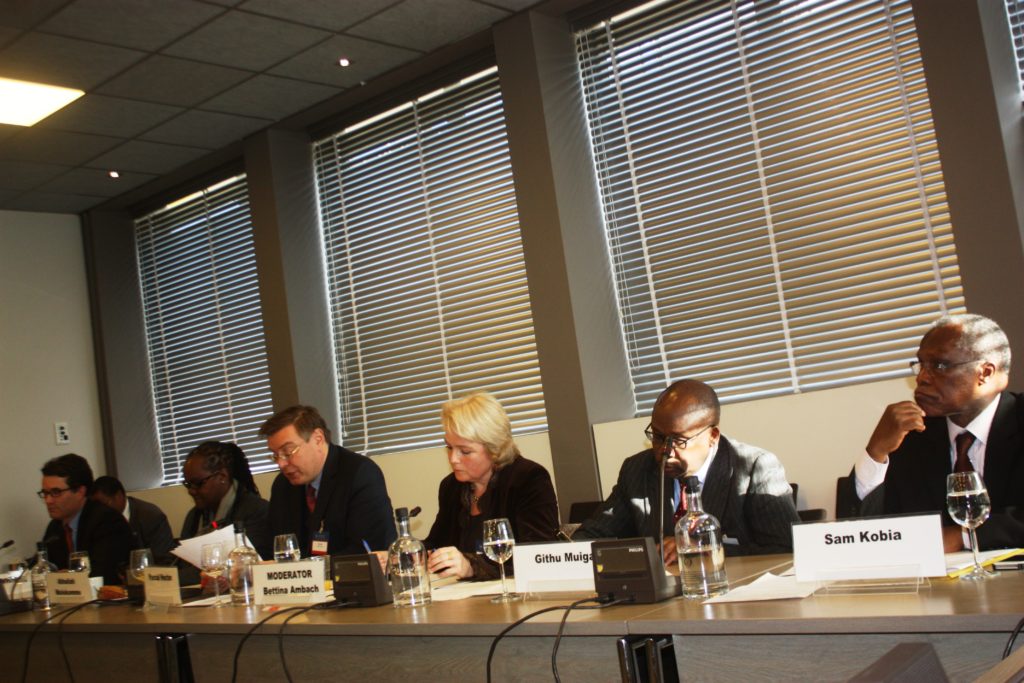
International Criminal Court Assembly of States Parties Side Event
On 23 November 2013, the Wayamo Foundation Director Bettina Ambach moderated a joint Germany/Kenya side event (PROGRAMME) at the twelfth session of the Assembly of States Parties of the International Criminal Court held between 20–28 November 2013 at the World Forum Convention Center in The Hague, The Netherlands. The panel discussion examined the challenges of the international criminal justice system in Africa and particularly in Kenya, its impact on the domestic accountability process and complementarity. The representative of the Kenyan International Crimes Division also talked about the establishment process of this special division of the High Court. SPEAKERS: Pascal Hector, Director International Law, Federal Foreign Office and Head of the German Delegation Githu Muigai, Attorney General of the Republic of Kenya and Head of the Kenyan Delegation Athaliah Molokomme, Attorney General of the Republic of Botswana Sam Kobia, Judicial Service Commission and Chair of the Committee overseeing the establishment of the International Crimes Division (ICD), Nairobi Dr. Alex Whiting, Professor, Harvard Law School Photos by Kris Kotarski.
Public Debate in Nairobi on Kenya and the ICC
On Sept. 4, the Institute for War and Peace Reporting and the Wayamo Communication Foundation came together to host a ReportingKenya.net international panel discussion at Strathmore University Auditorium in Nairobi. (PROGRAMME) The panel discussion featured a range of opinions on the different forms of justice Kenyans wish to see in their country, offering a forum for discussion for both supporters and opponents of national judicial proceedings and the International Criminal Court. The panel discussion began at 10.00 with welcoming remarks by Dr Luis Franceschi, Dean of Strathmore Law School. It was open to the public, and the audience was invited to ask questions throughout the moderated debate with panelists. SPEAKERS: Kioko Kamula, Senior Assistant Director of Public Prosecutions Phakiso Mochochoko, Head of Jurisdiction, Complementarity and Cooperation Division, Office of the Prosecutor, International Criminal Court Wilfred Nderitu, Legal Representative of Victims at the International Criminal Court Gertrude Angote, Executive Director, Kituo Cha Sheria Prof. Peter Kagwanja, Chief Executive Africa Policy Institute and former Government Advisor Audio files of the panel discussion are available at ReportingKenya.net.
