
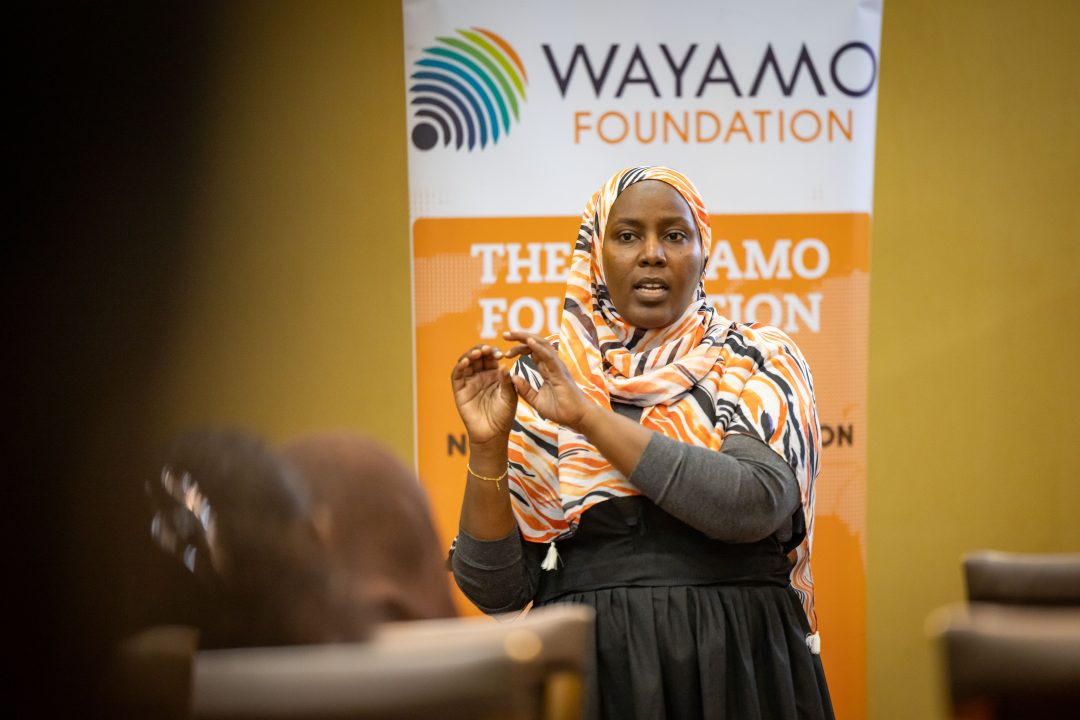
On 24 November 2025, in Kampala, Uganda, the Wayamo Foundation hosted a one-day training designed to help the documenters in its network understand and mitigate the effects of vicarious trauma and provide practical strategies for managing stress and secondary trauma in the course of their work.
The workshop was facilitated by Manal Mohamed, a Sudanese mental health and psychosocial support expert, and focused on the psychological well-being of Wayamo’s Sudanese documentation teams. The workshop took place over half a day, with the remaining half dedicated to an well-being session on Lake Victoria.
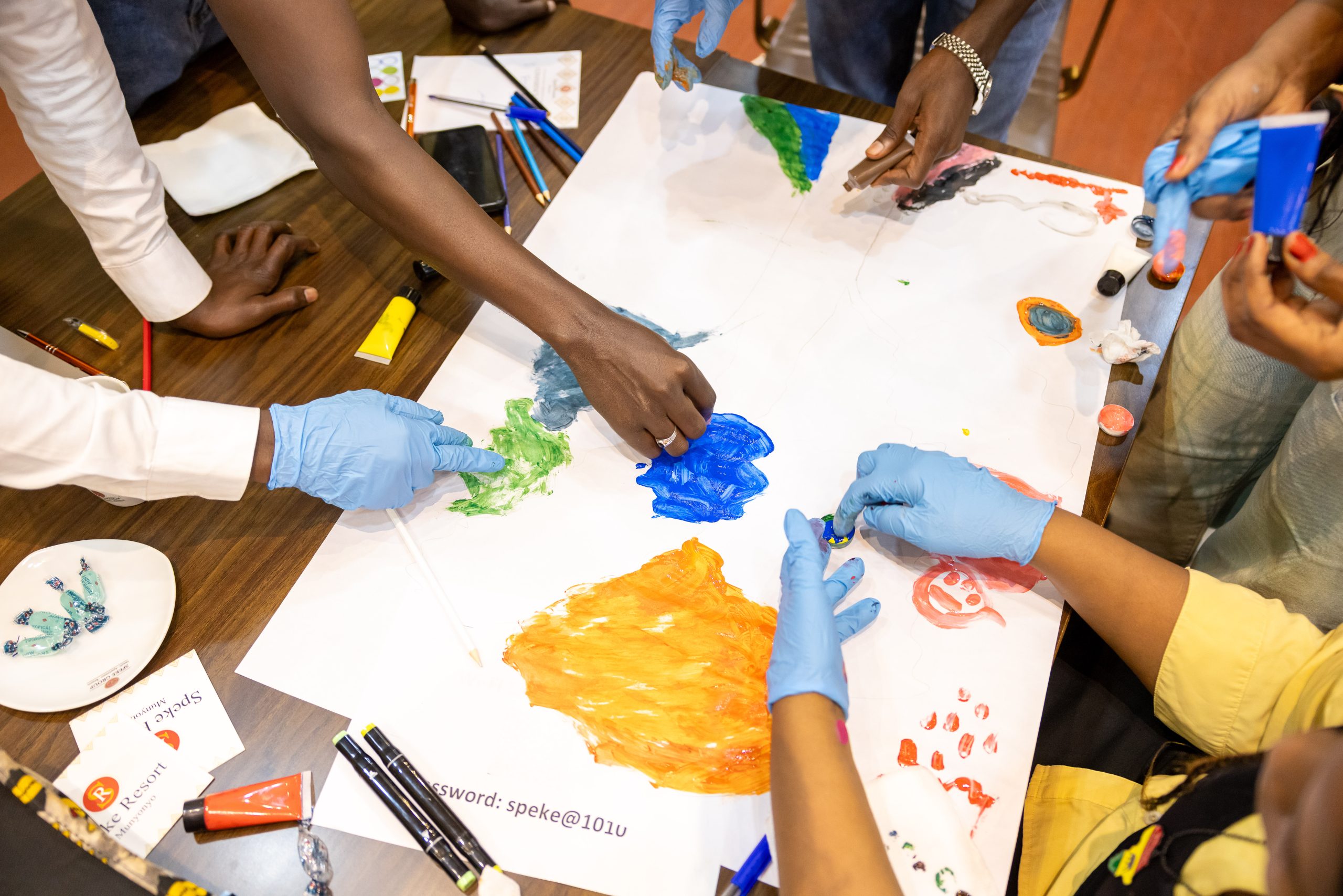
During the workshop, groups of participants mapped sensations, emotions, and fatigue patterns collectively, discussing the shared experience of vicarious trauma and resilience. The workshop helped the participants to experience how emotional material from others (or the work itself) transfers subtly and accumulates over time, illustrating the dynamics of vicarious trauma and the importance of awareness, boundaries, and restorative self-care.
This was followed by a hands-on exploration of how stress and exposure settle in the body and mind. Working in small groups, participants created collective body maps using colour, symbols, and textures to depict physical sensations, emotional patterns, moral conflict, and the daily spillover of work. Themes such as erosion, resilience, community healing and boundaries emerged, and groups could take their time to witness shared patterns, and identify systemic needs.
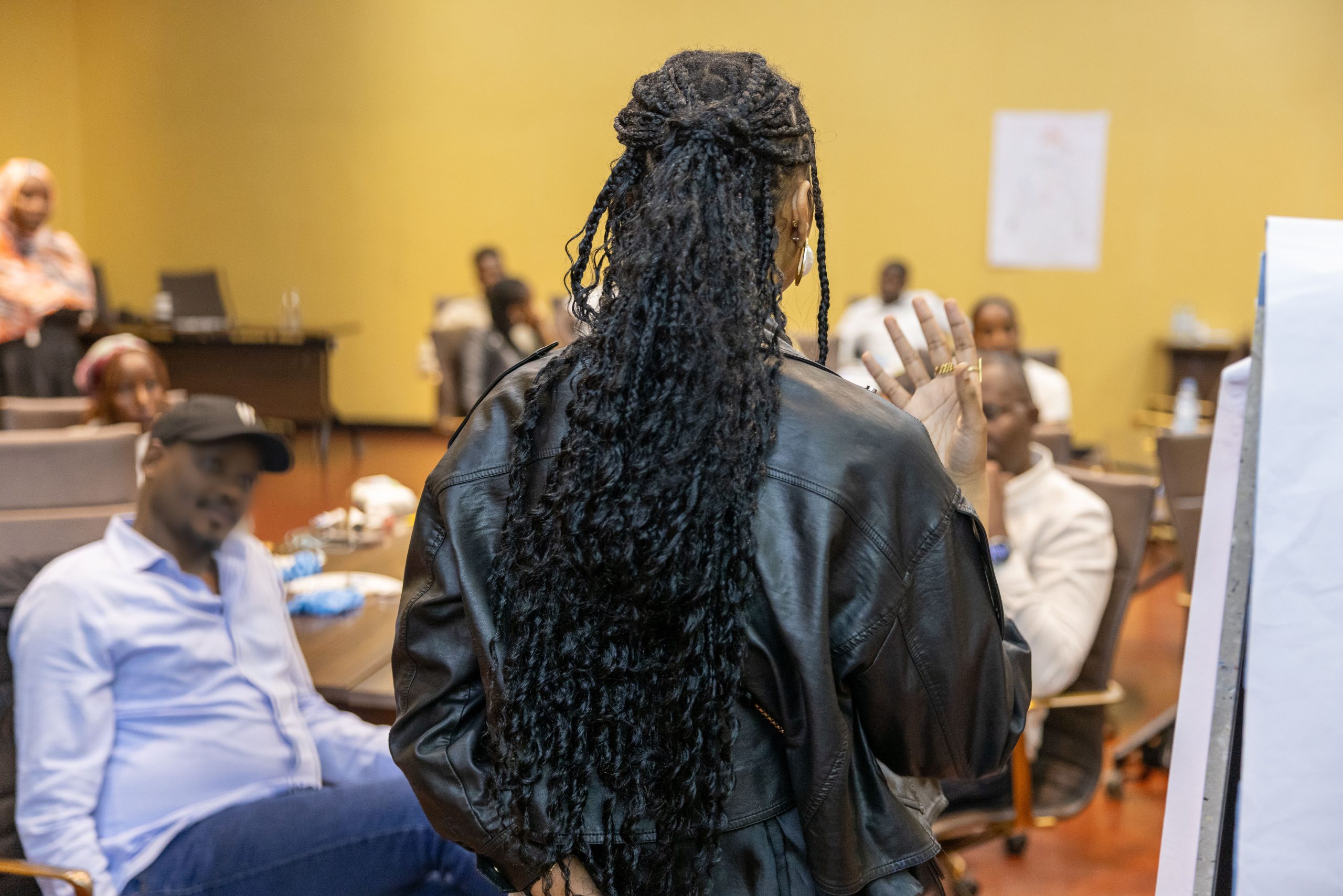
The participants worked on creating a “community tree of care”, using paint to show their values, strength, support, and impact as well as what may erode it, while staying mindful of how others’ emotions quietly imprint on them, underscoring the need for cleansing and grounding practices.
Participants also examined possible patterns for resilience, including immediate and long-term strategies, supported by short regulation practices.
“This was very useful, because psychological balance is extremely important for anyone working with survivors and affected individuals,” said one of the participants.
“It is necessary to separate what happens to others from my own emotions,” added another.
The workshop closed with guidance on recognising red flags, knowing when to seek professional support, and reinforcing that seeking help early was a sign of strength.
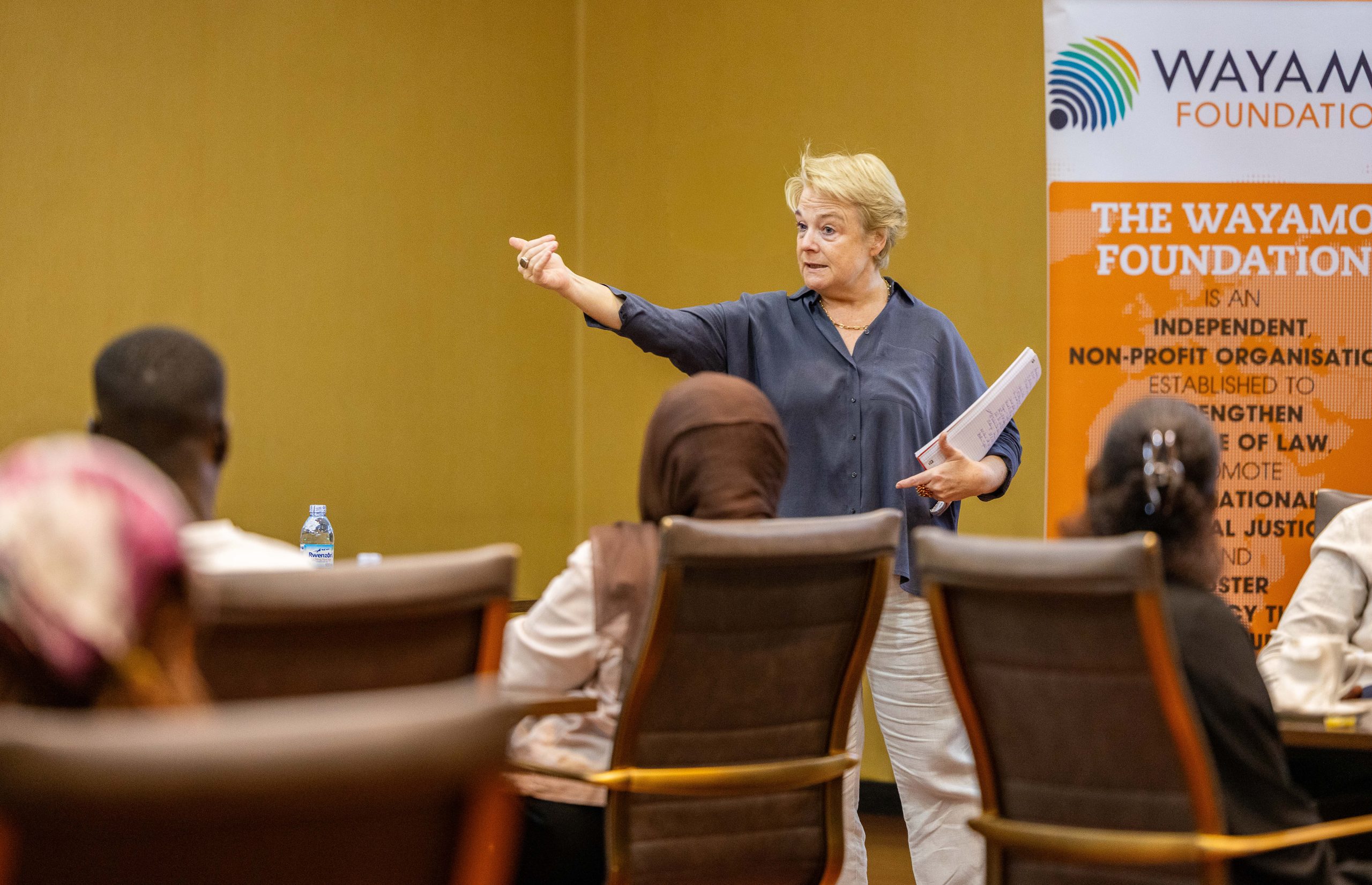
Bettina Ambach.
“The workshop was designed as an introductory engagement on vicarious trauma after having received several requests from our network following the fall of El Fasher in October,” said Wayamo Director Bettina Ambach. “Wayamo intends to build on this foundation in a subsequent session through more detailed discussions on trauma, additional practical support tools, and the development of personalised support plans.”
