
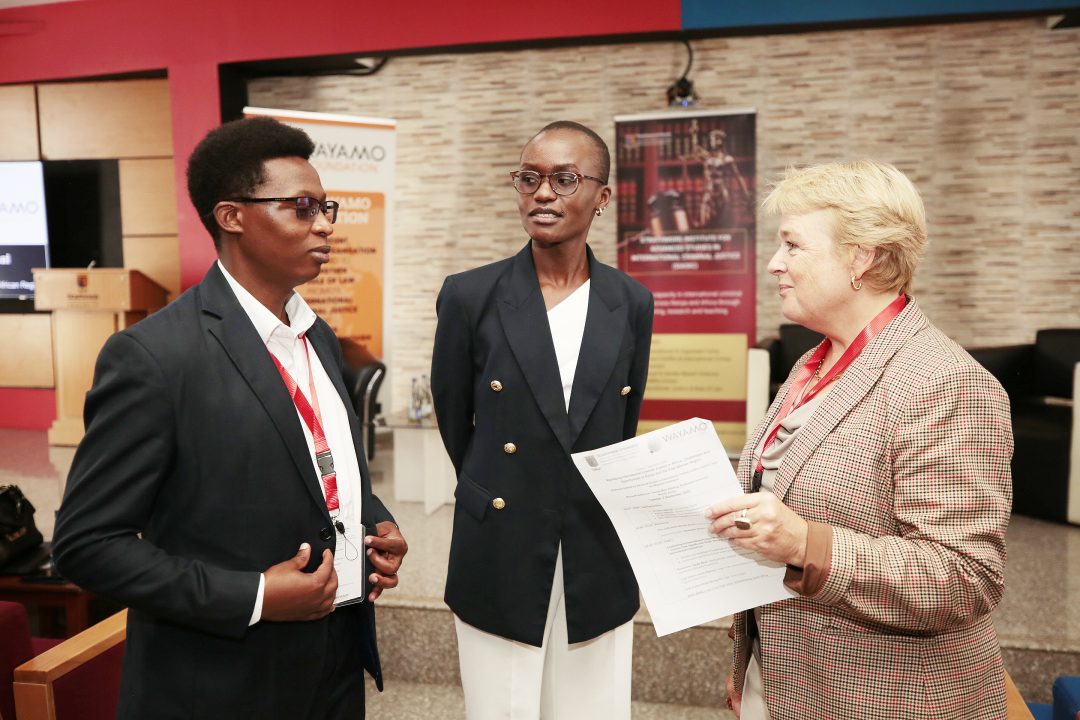
On 2 September 2025, the Wayamo Foundation convened experts for a symposium on the theme “Appraising International Criminal Justice in Africa.” The event, co-hosted with the Strathmore Institute for Advanced Studies in International Criminal Justice (SIASIC) and held at Strathmore’s Microsoft Auditorium in Nairobi, brought together judges, prosecutors, legal scholars, civil society experts, and international practitioners who focused on the challenges and opportunities for advancing justice efforts for international crimes in Kenya, and in the region.
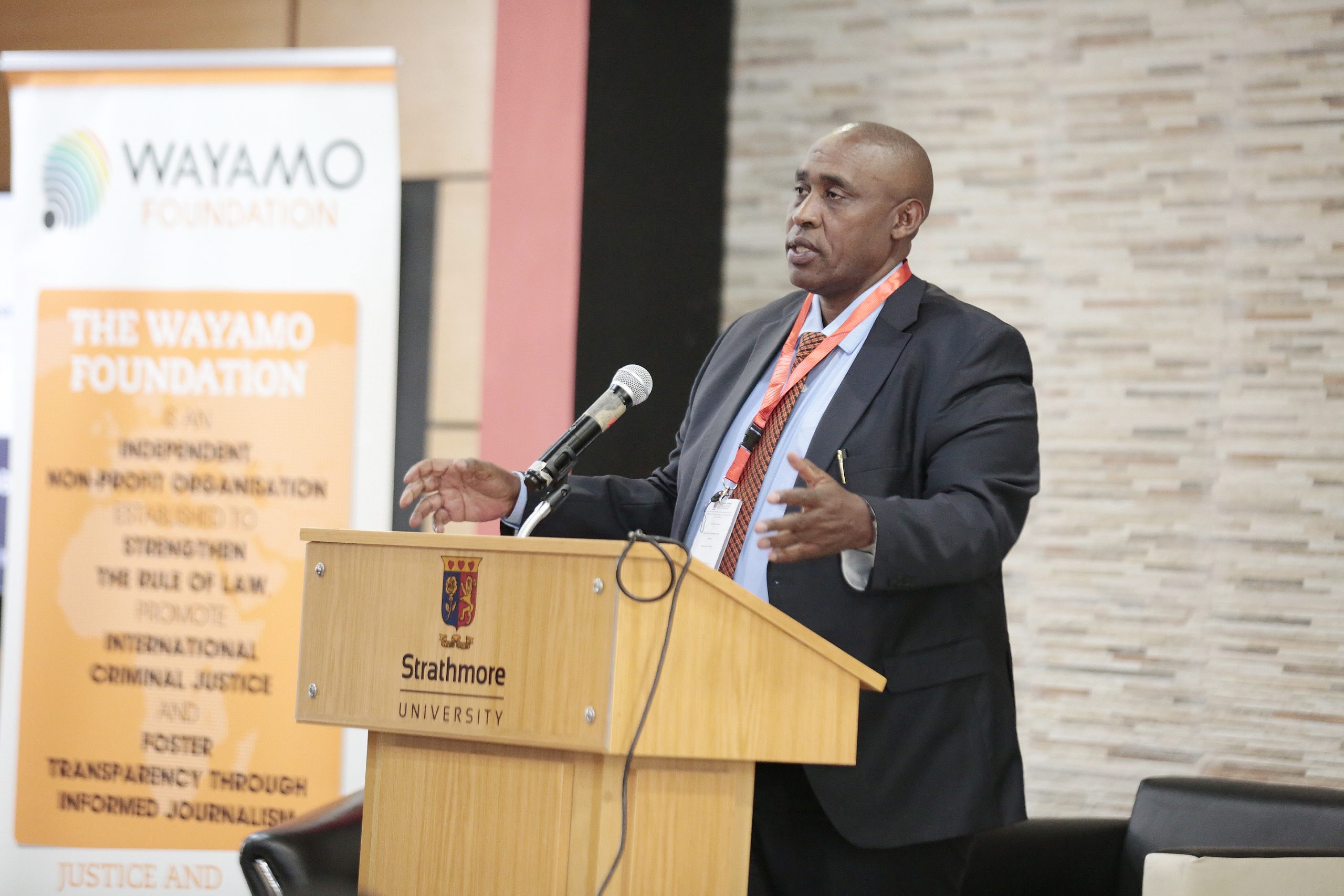
Alexander Muteti
The event was opened by the Chief Justice of Kenya, Martha Koome, whose opening remarks were delivered by Justice Alexander Muteti.
The Chief Justice stressed Kenya’s commitment to justice and accountability.
“By enacting the International Crimes Act in 2008, we domesticated the Rome Statute framework and signalled a sober commitment: when the gravest crimes are alleged, our courts and institutions will not look away,” she stressed. “That our Constitution and statute provide the architecture for accountability at home consistent with the principle of complementarity. Accountability has been a north star for our bench and bar, and it remains central to our next phase of work.”
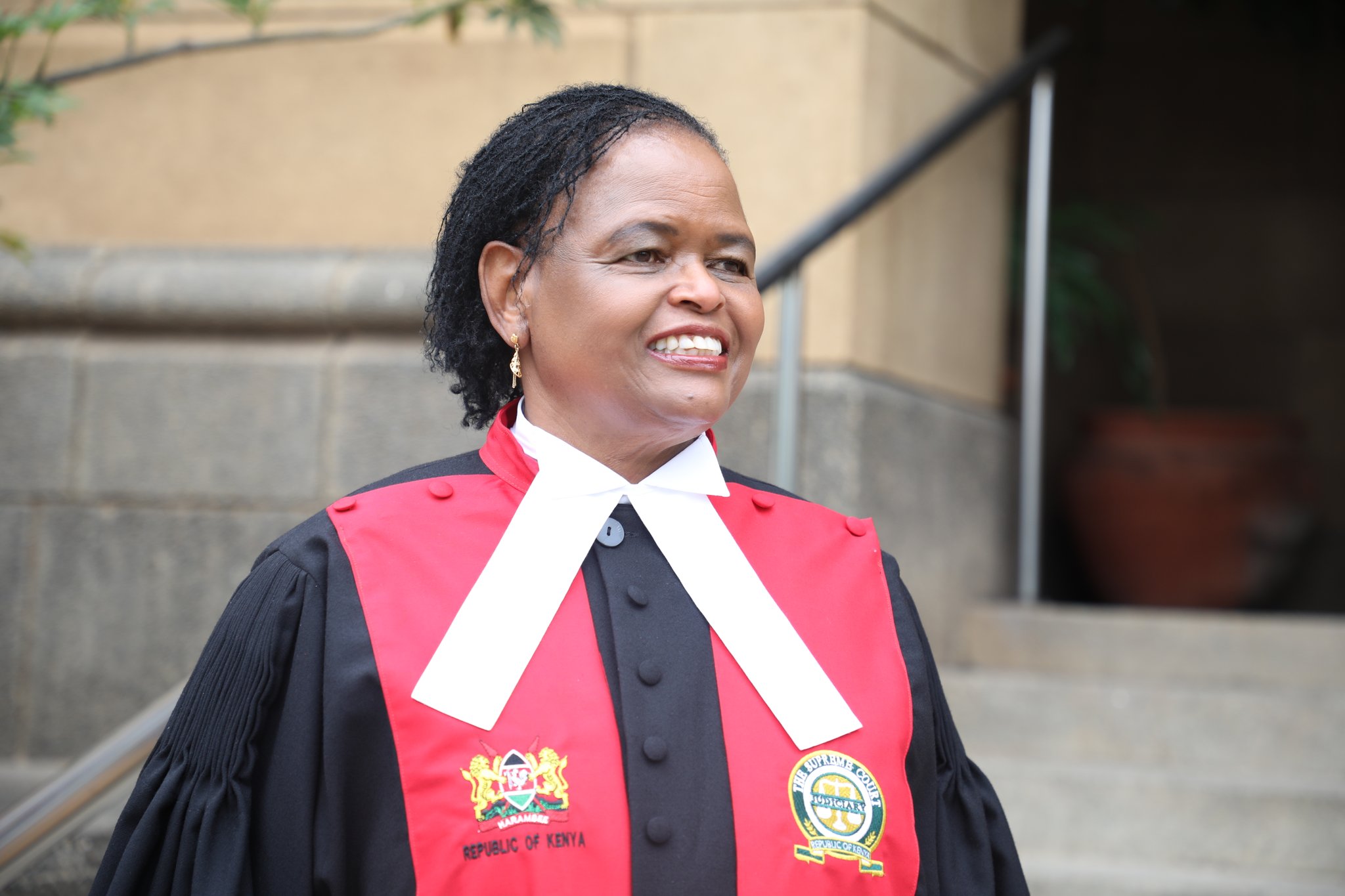
Martha Koome, Cmwaura – CC BY-SA 4.0
“There is also much to learn from our neighbours. Uganda’s International Crimes Division has built specialised practice around international crimes trials. South Africa’s courts have demonstrated, through the Southern African Litigation Centre and Another v National Director of Public Prosecutions and Others decision, that domestic authorities can and must investigate atrocity crimes where jurisdiction exists, even when the conduct occurred beyond their borders. These are examples of the region using domestic courts to narrow impunity gaps.”
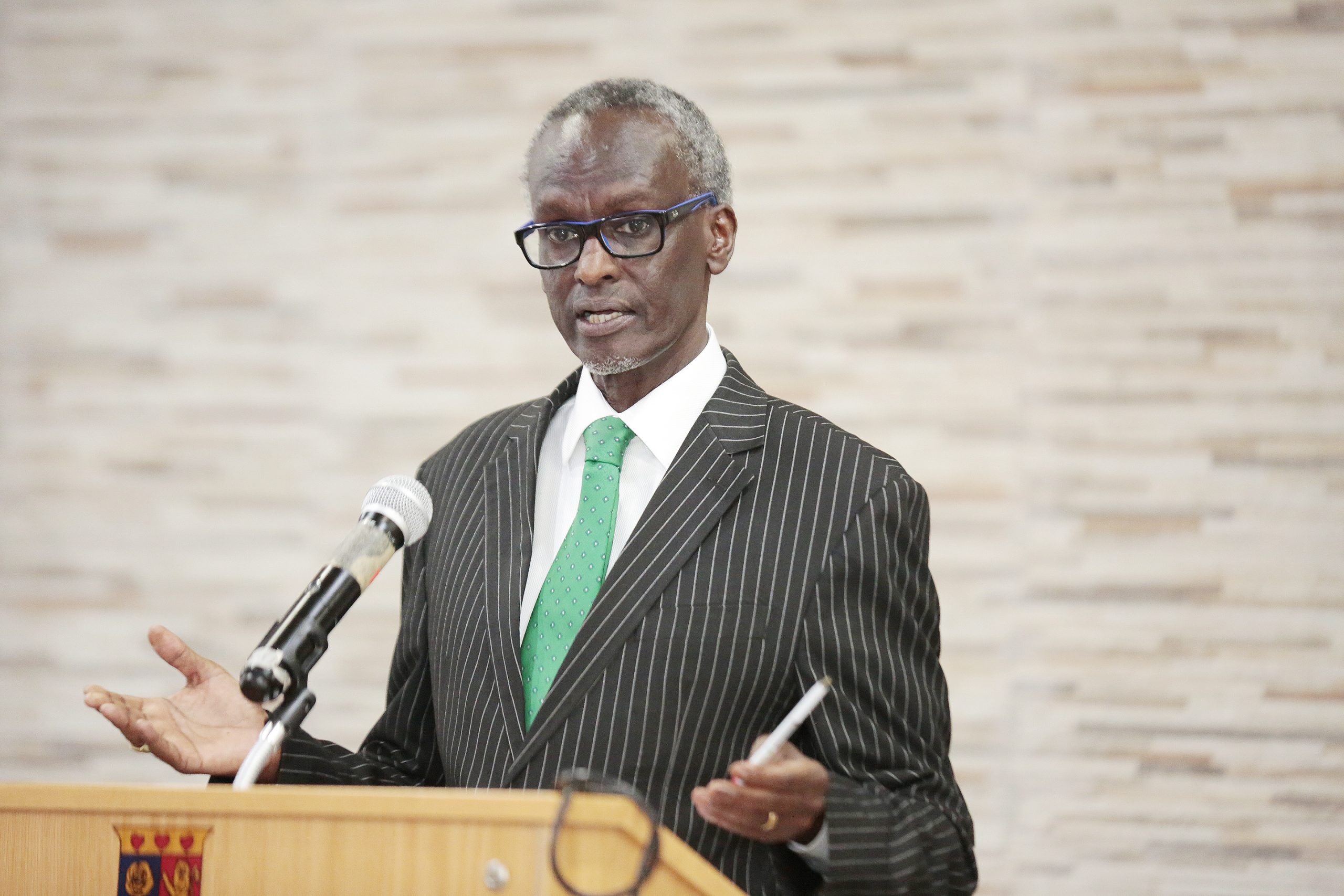
Isaac Lenaola
Supreme Court Justice, and President of the Advisory Board of SIASIC Isaac Lenaola, spoke about the challenges of prosecuting international crimes at the national level.
“The question of immunity for state officials remains contentious, often impeding accountability efforts,” he continued. “Now we have the opportunity in the Baby Pendo case to use the International Crimes Act and to set a precedent for future prosecutions and show the overall effectiveness of the ICA.” “I hope at the end of the day we present a roadmap for the creation of a model court or division that will be able to effectively try international crimes in Kenya.”
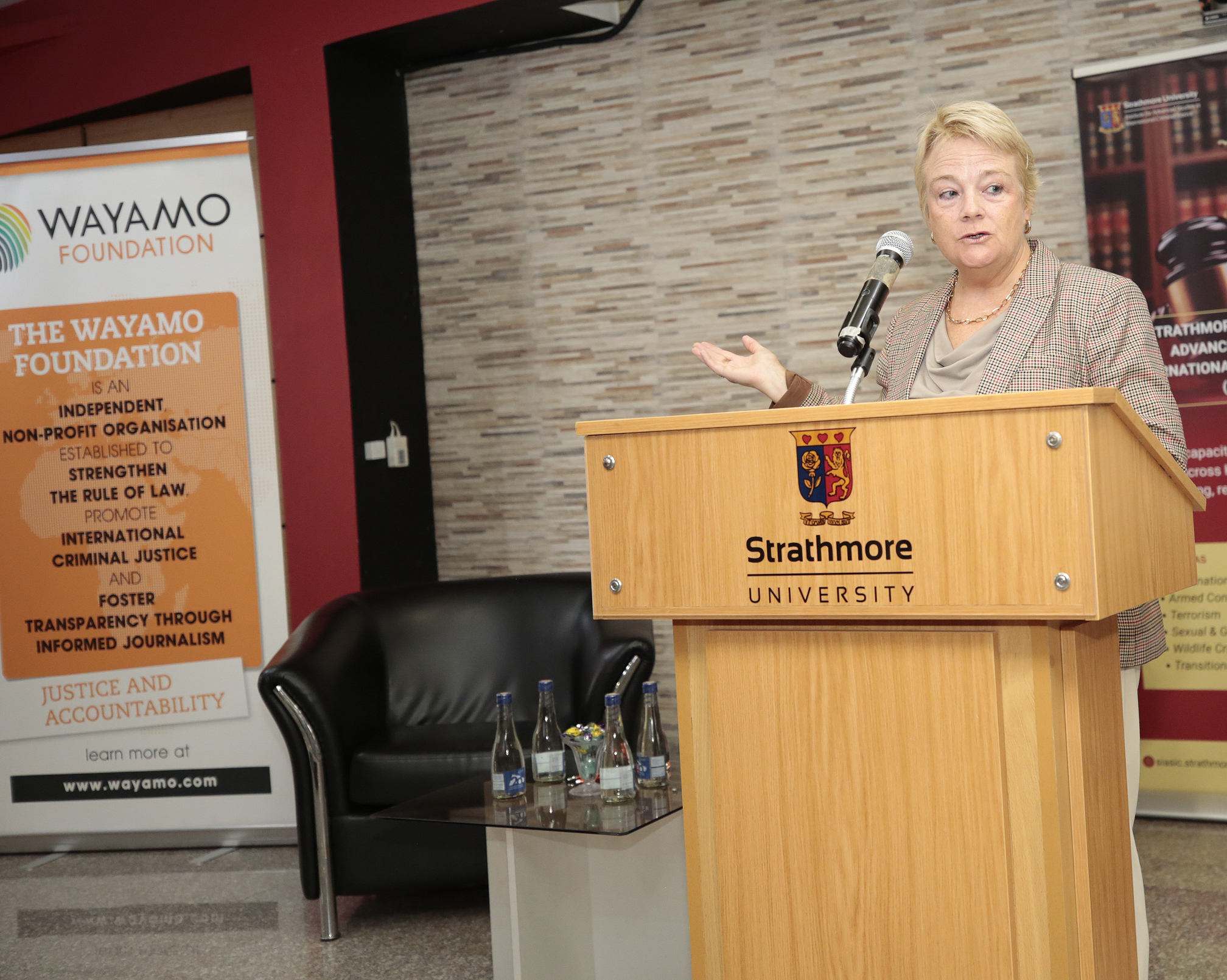
Bettina Ambach
In her opening remarks, Wayamo’s Director, Bettina Ambach, took the audience back to the first attempt to establish an International Crimes Division in the High Court of Kenya.
“At a Wayamo conference organized together with Strathmore University in November 2012, Kenya‘s Chief Justice Dr. Willy Mutunga announced the intention to establish an International Crimes Division of the High Court of Kenya. The name was subsequently changed to ‘International and Organised Crimes Division,’ IOCD. The process of this first attempt to establish an ICD lasted four years, from May 2012 to June 2016, and involved numerous multi-stakeholder meetings, strategic discussions, retreats, legal opinions, and negotiations. It concluded in June 2016 with the cancellation of the planned official launch ceremony.
“We need to do some research and soul-searching to learn from that first endeavor and improve this time.”
The audience also heard from Dr. Claire Adionyi, Co-Director, SIASIC and Dr. Jane Wathuta, Dean, Strathmore Law School who talked about the role of universities as centres of learning and innovation, highlighting their importance in advancing intellectual engagement and contributing to matters of national significance.
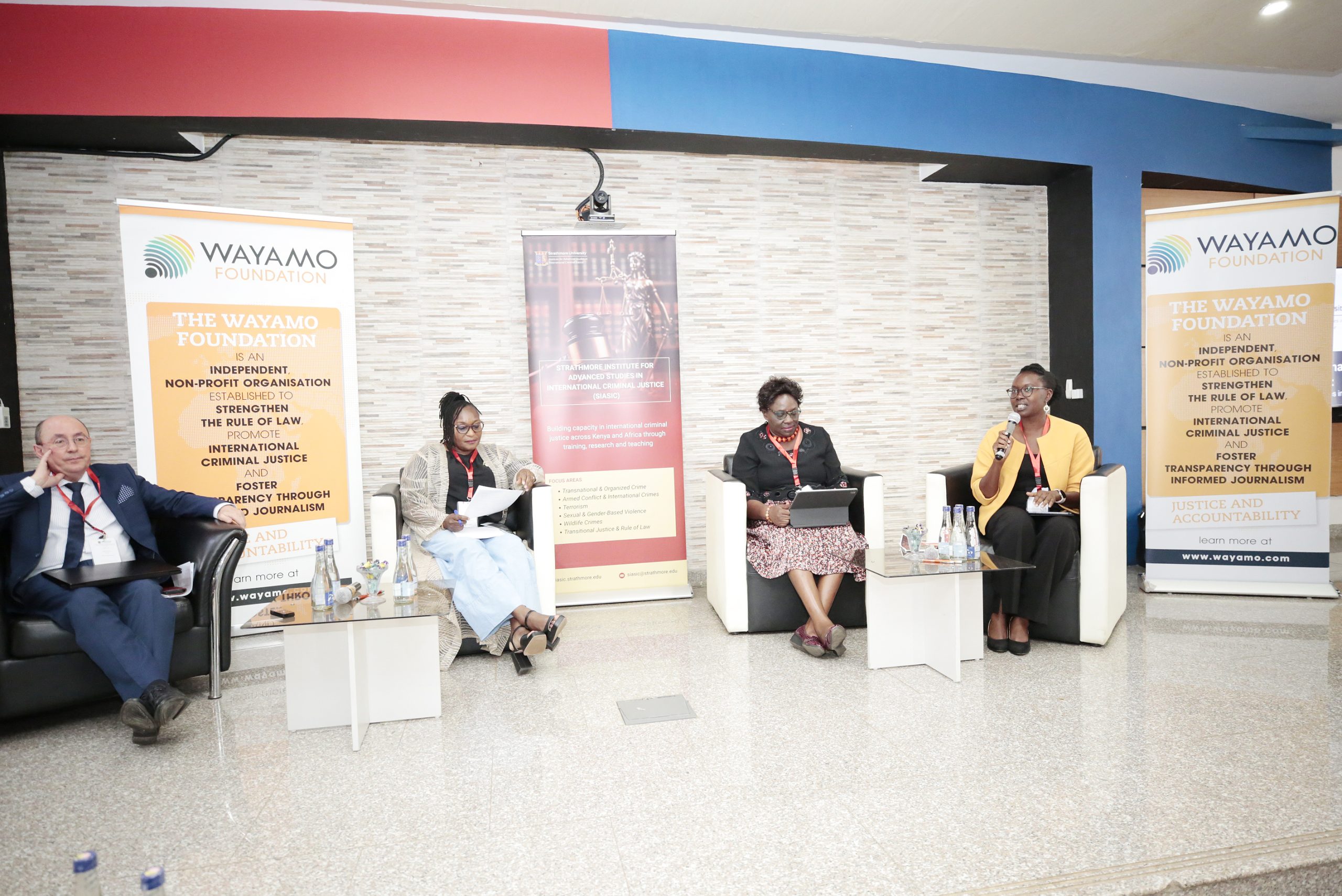
Dario Dosio, Susan Okalany, Diana Mochache, Linda bore
The symposium began with a panel on establishing an International Crimes Division within Kenya’s judicial structure, focusing on Lessons for Kenya from other contexts (Europe, South Africa and Uganda)
Kenyan High Court Judge, Lady Justice Diana Mochache, spoke of the value in establishing an International Crimes Division in Kenya, which would among others, “contribute to bringing justice home as opposed to being served in far off locations, rebuild trust in the judiciary and contribute to the exercise of complementarity.”
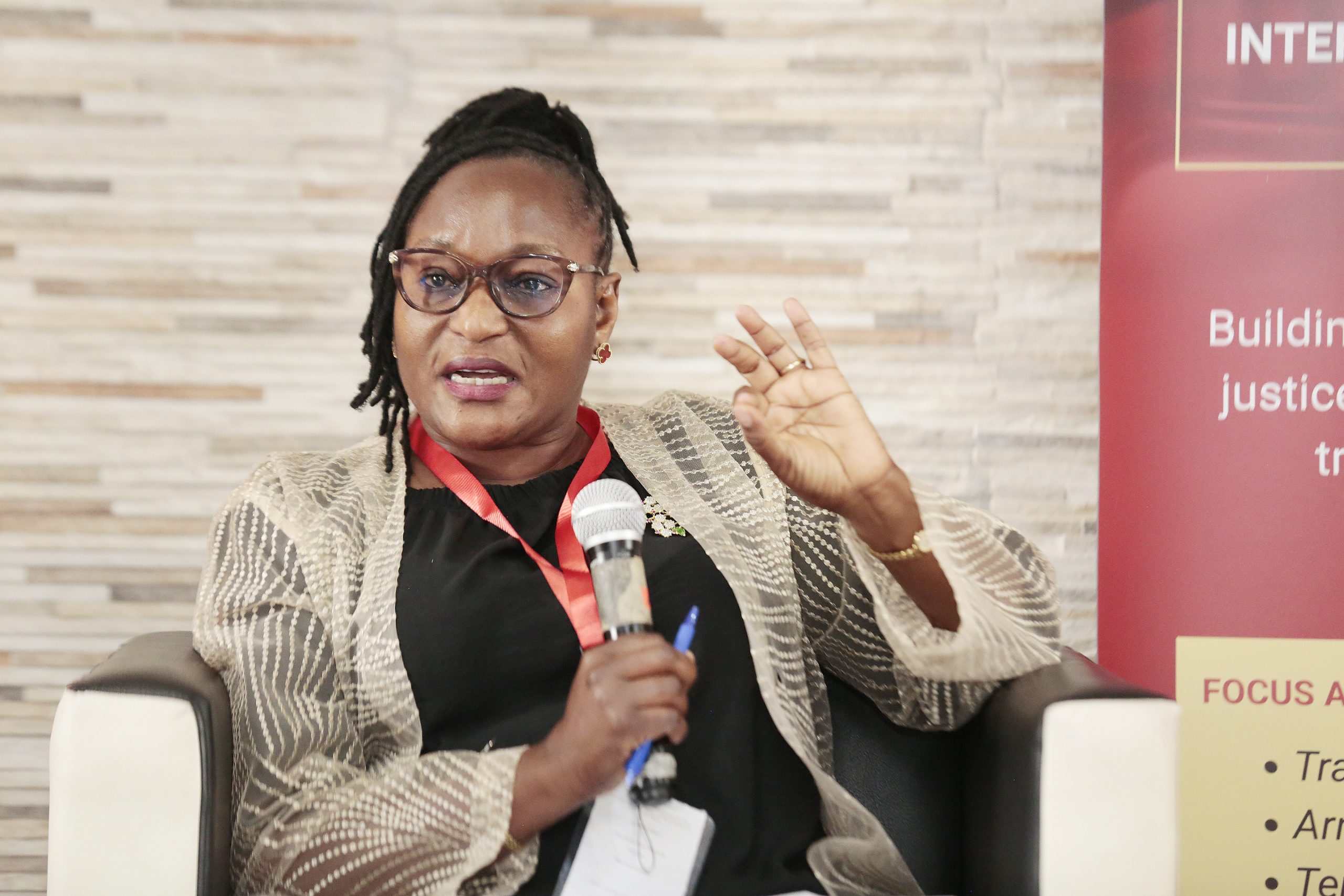
Diana Mochache
She spoke of her determination to work towards the establishment of such a division in Kenya’s judiciary and asked for domestic and international support, recommended to strengthen the witness protection regime and to organise capacity building for investigators, prosecutors and judges.
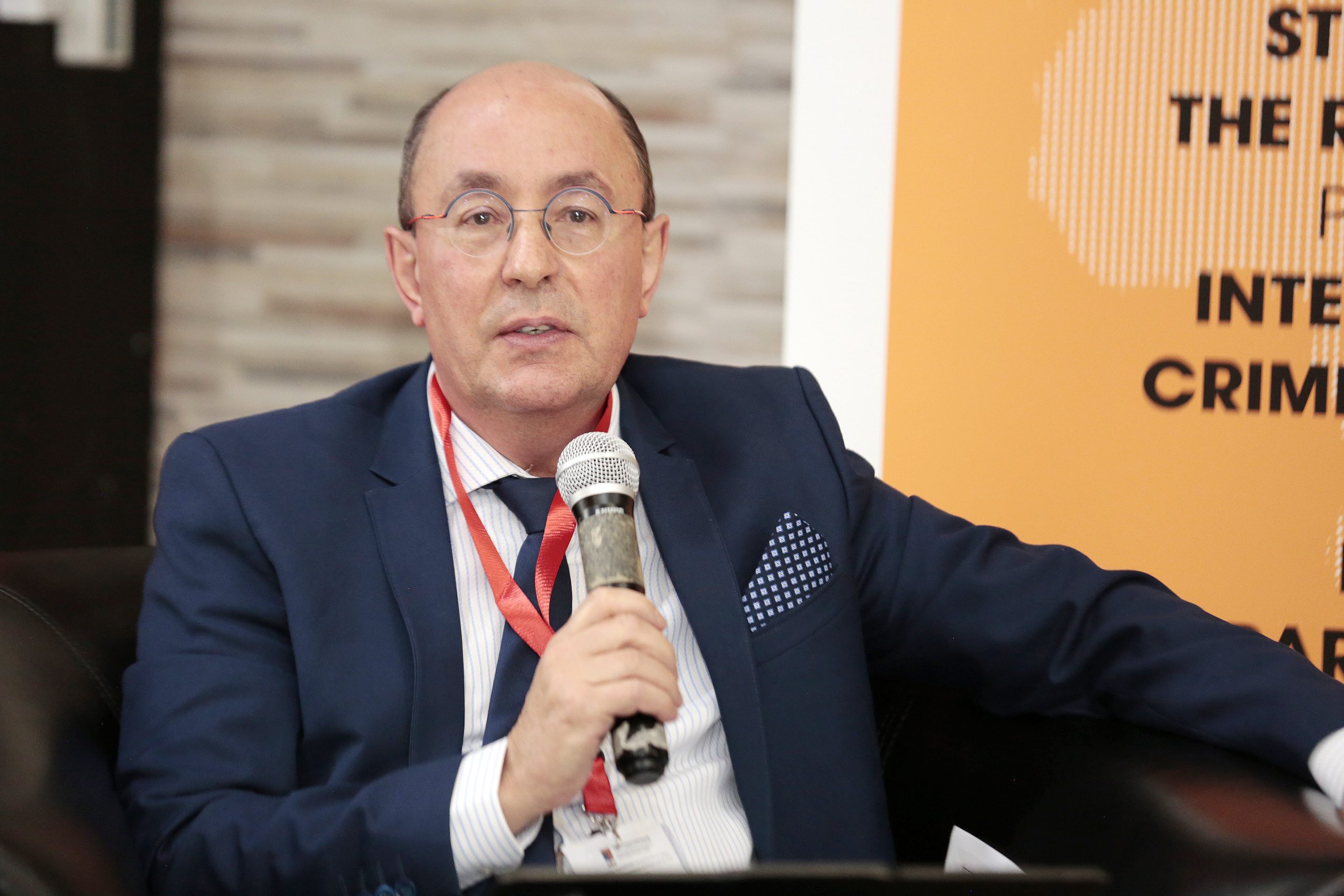
Dario Dosio
Justice Dario Dosio of the South African High Court spoke of South Africa’s experiences with international criminal law which include important rulings on universal jurisdiction and South Africa´s cooperation obligations with the ICC. Though it lacks a specialised division, an important case on crimes against humanity is currently being heard in the courts, such as the COSAS 4 trial, which arose from events in 1982 while South Africa was still under Apartheid. . A recent landmark decision by Judge Dosio affirmed that apartheid is a crime against humanity under domestic law.
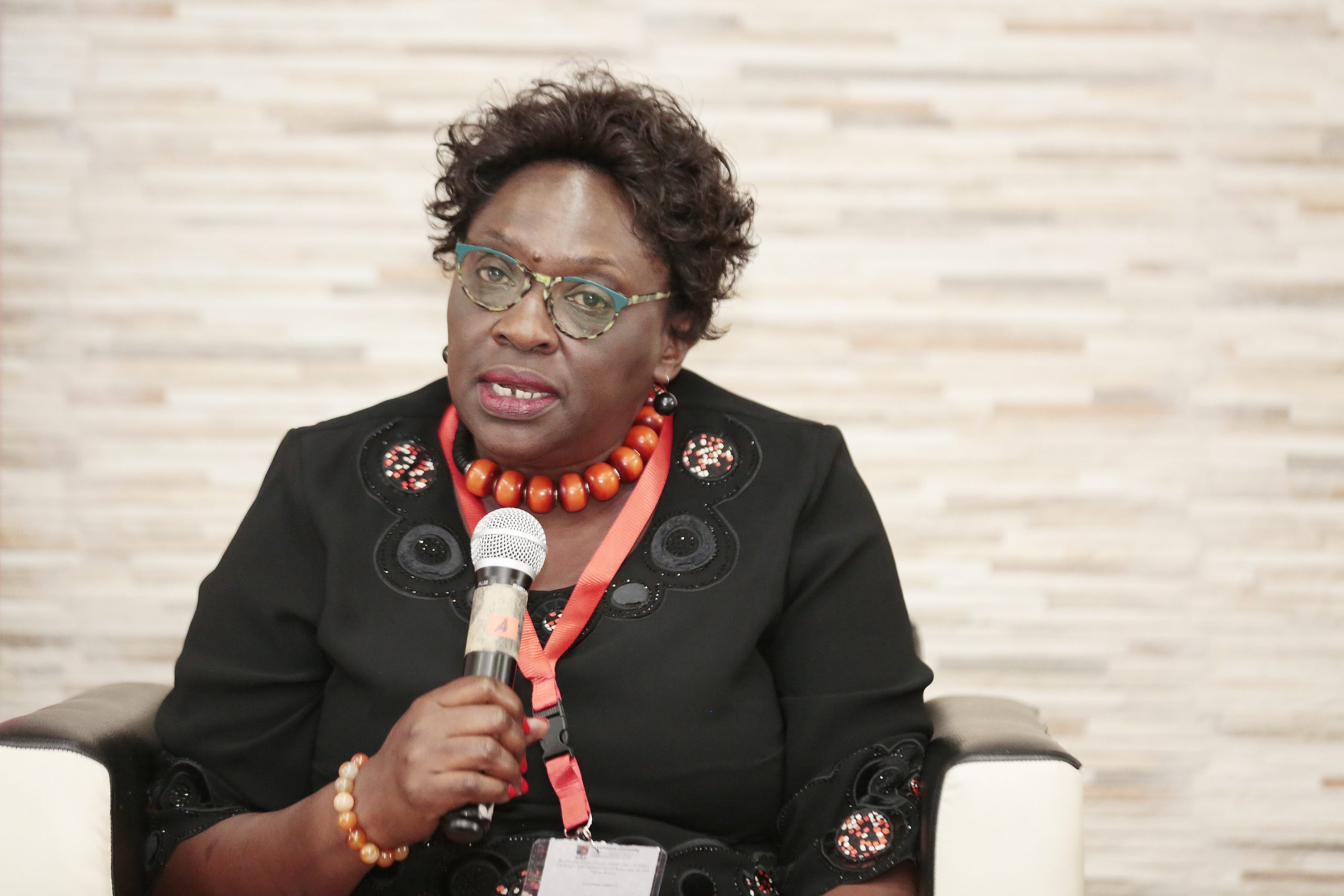
Susan Okalany
Lady Justice Susan Okalany from the High Court of Uganda looked back at over a decade of the International Crimes Division in Uganda, and the division’s greatest achievements, as well as shortcomings. In encouraging Kenya to establish a similar division she noted that “Kenya is already halfway there.”
“Let the work of the Court begin,” she stressed. “Start by handling transnational crimes and other cases of a similar nature in the division. In due course, international crimes cases will follow.”
Members of the audience contributed to the discussion with some notable comments underlining that the setting up of such a division is not in itself “a silver bullet.” Delivery of justice is what matters and not “mere structures.”
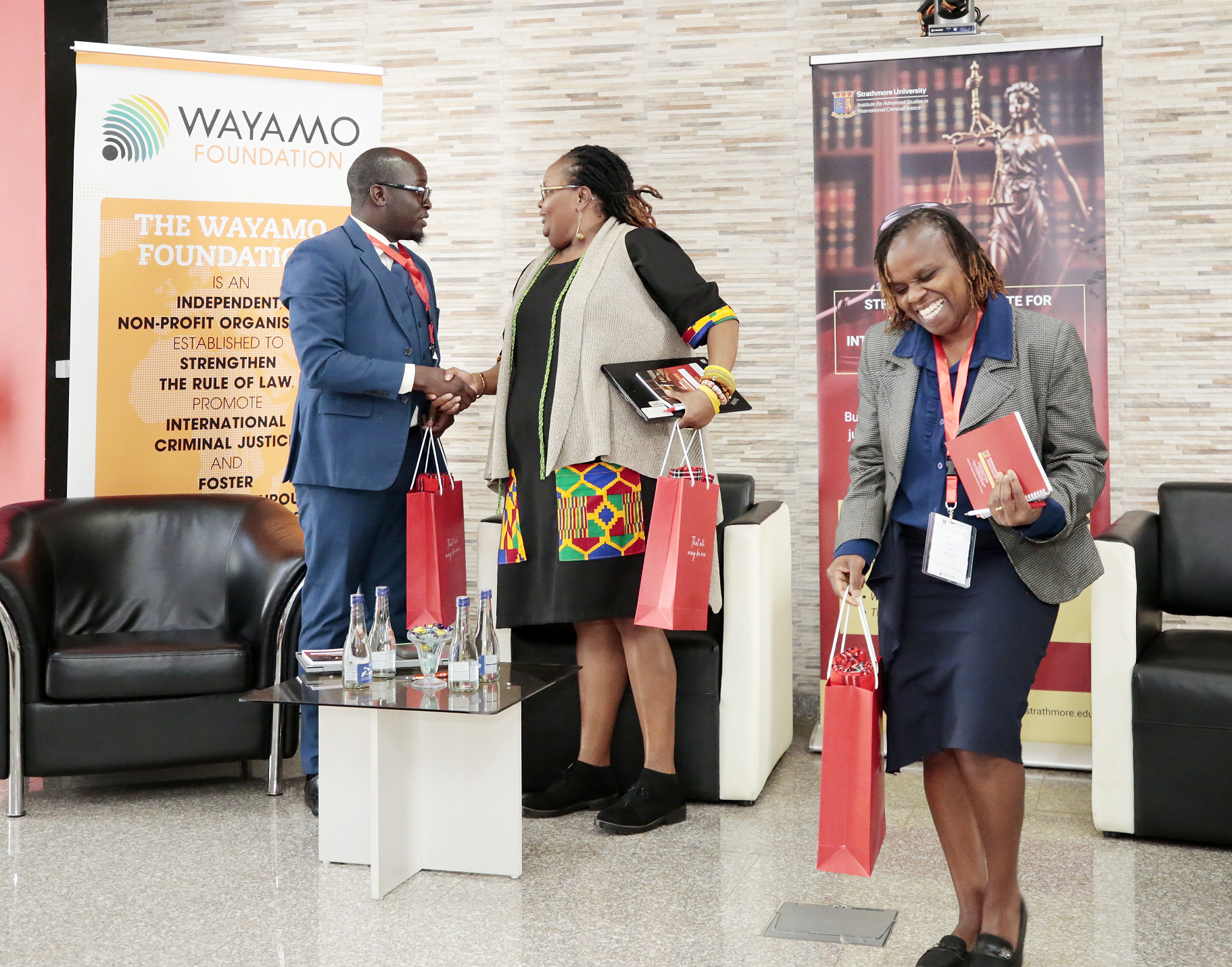
Victor Owiti, Lydia Muthiani, Evelyne Asaala
The symposium continued with the second panel on prosecuting international crimes in Kenya and operationalising the International Crimes Act. The panel examined the practical and legal challenges of implementing the act which came into law in 2009.
Dr. Evelyne Asaala, Lecturer of Law, University of Nairobi discussed the history and background of the Act, looking at issues such as jurisdiction and highlighting some procedural hurdles in implementing the Act. She concluded by saying that one of the “biggest challenges though in international crime cases is political interference!”
Victor Owiti, Principal Prosecution Counsel, Office of the Director of Public Prosecutions, Nairobi also addressed procedural hurdles. He discussed cases that the ODPP is currently handling such as the Baby Pendo and Shakahola cases, and how the lessons learned from these cases could inform future cases such as what is currently happening at Kwa Binzaro.
In her remarks, Ms. Lydia Muthiani, Co-founder of the Utu Wetu Trust spoke about victim and witness protection, emphasizing how lessons learned from past cases including Baby Pendo, can guide the operationalisation of the International Crimes Act in Kenya.
She highlighted a number of recommendations to strengthen victim and witness protection, including the establishment of a dedicated victim representation office, stronger support and assistance for victims, and specialised capacity building for all actors involved. She further stressed the importance of sustainable funding for witness protection, built-in protection mechanisms, and stronger inter-agency collaboration.
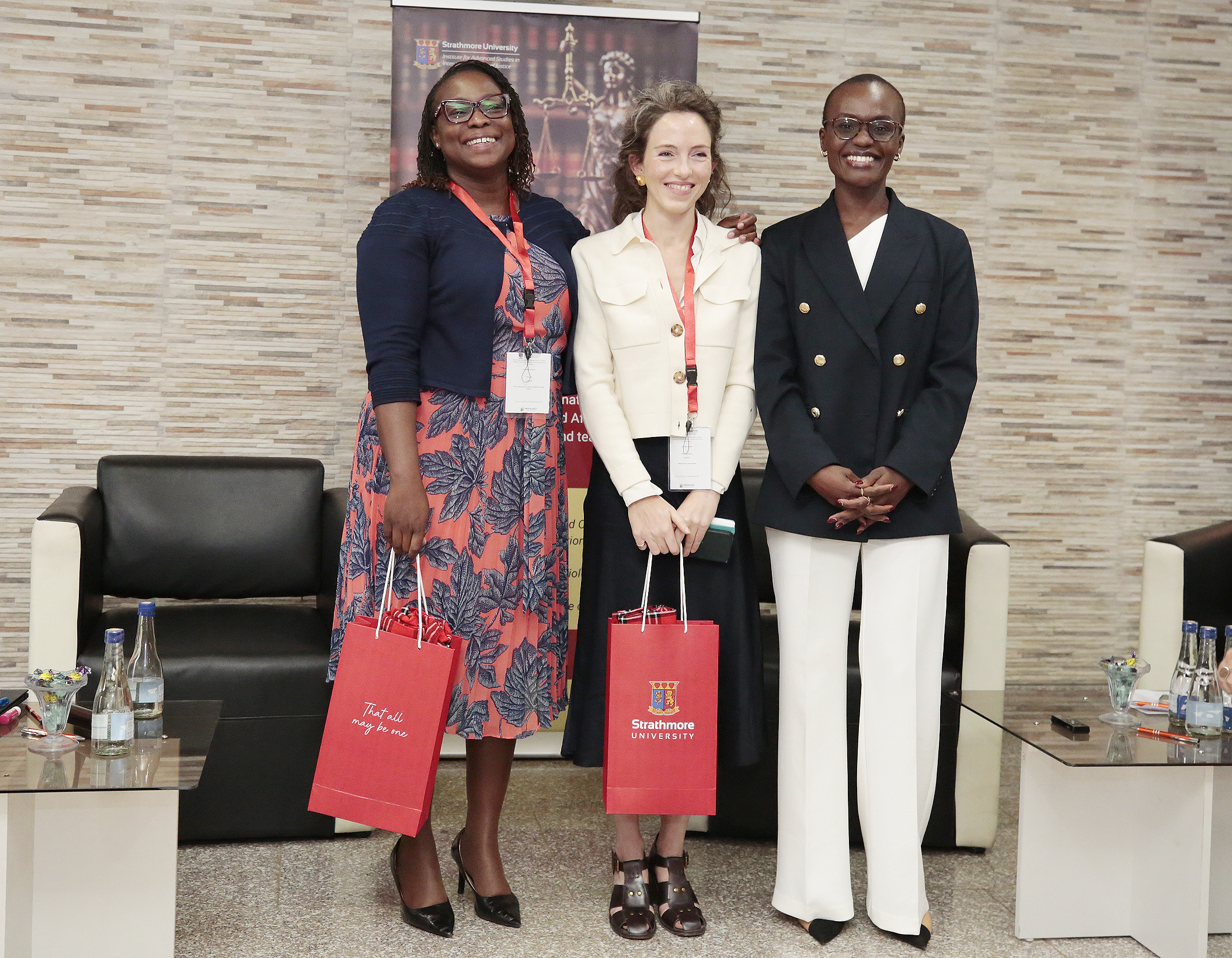
Tina Alai, Kirsty Sutherland, Claire Adionyi
The third panel focused on Universal Jurisdiction and Kenya’s role in addressing international crimes in the region. Speakers explored recent trends in the use of universal jurisdiction, asked why nearly all such cases were in Europe despite the fact that many African countries have domesticated the Rome Statute and have the required laws in place.
Tina Alai, Transitional Justice Advisor, United Nations Commission on Human Rights in South Sudan examined the feasibility of prosecuting foreign suspects in Kenya, the critical role of civil society in enabling universal jurisdiction, and the various challenges and opportunities that arise in practice.
Kirsty Sutherland, a barrister specialising in international criminal, humanitarian and public law, reflected on lessons from other States that have exercised universal jurisdiction and considered how these experiences could inform Kenya’s approach.
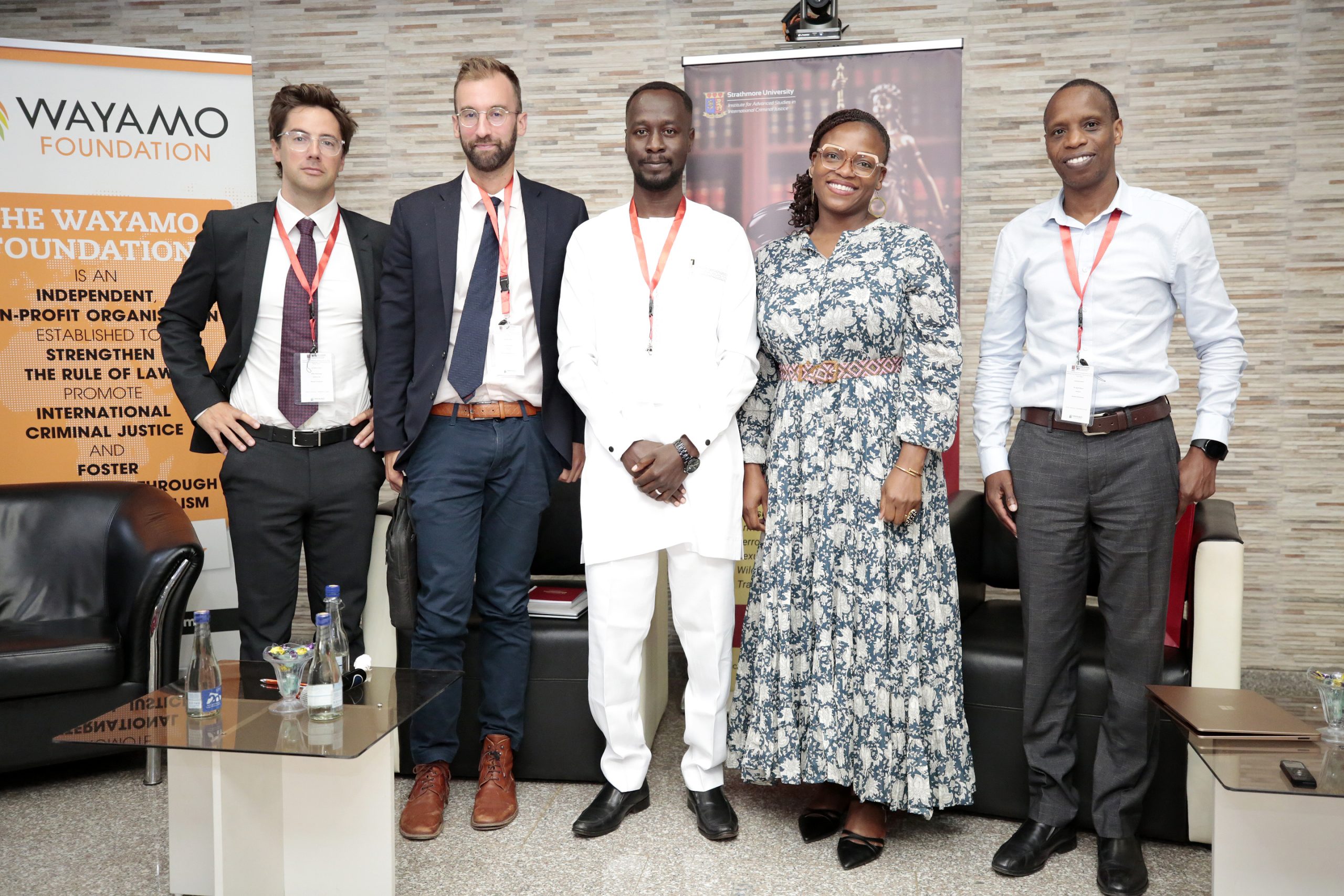
Mikel Delagrange, Yonah Diamond, Basit Mohamed, Joké Babington-Ashaye, Japheth Bigeon
The fourth and final panel on how to move the needle towards justice focused on exploring accountability mechanisms in complex contexts such as Sudan.
The discussion examined the role of the International Criminal Court with a contribution from Pubudu Sachithanandan, Head of Unified Team – Darfur (recent crimes), Office of the Prosecutor, International Criminal Court. The discussion also focused on the contribution of fact-finding missions as presented by Dr. Japheth Bigeon, Africa Regional Advocacy Coordinator, Amnesty International, and the contribution of civil society organisations to the documentation of human rights violations as delivered by Abdalbasit Mohamed, Wayamo’s Sudan Legal and Research Officer.
Panelists considered innovative approaches to disrupting the commission of international crimes and highlighted creative measures that can advance accountability as discussed by Yonah Diamond, Senior Legal Counsel, Raoul Wallenberg Centre for Human Rights who spoke about prospective cases at the International Court of Justice and the viability of strategic litigation against corporate entities.
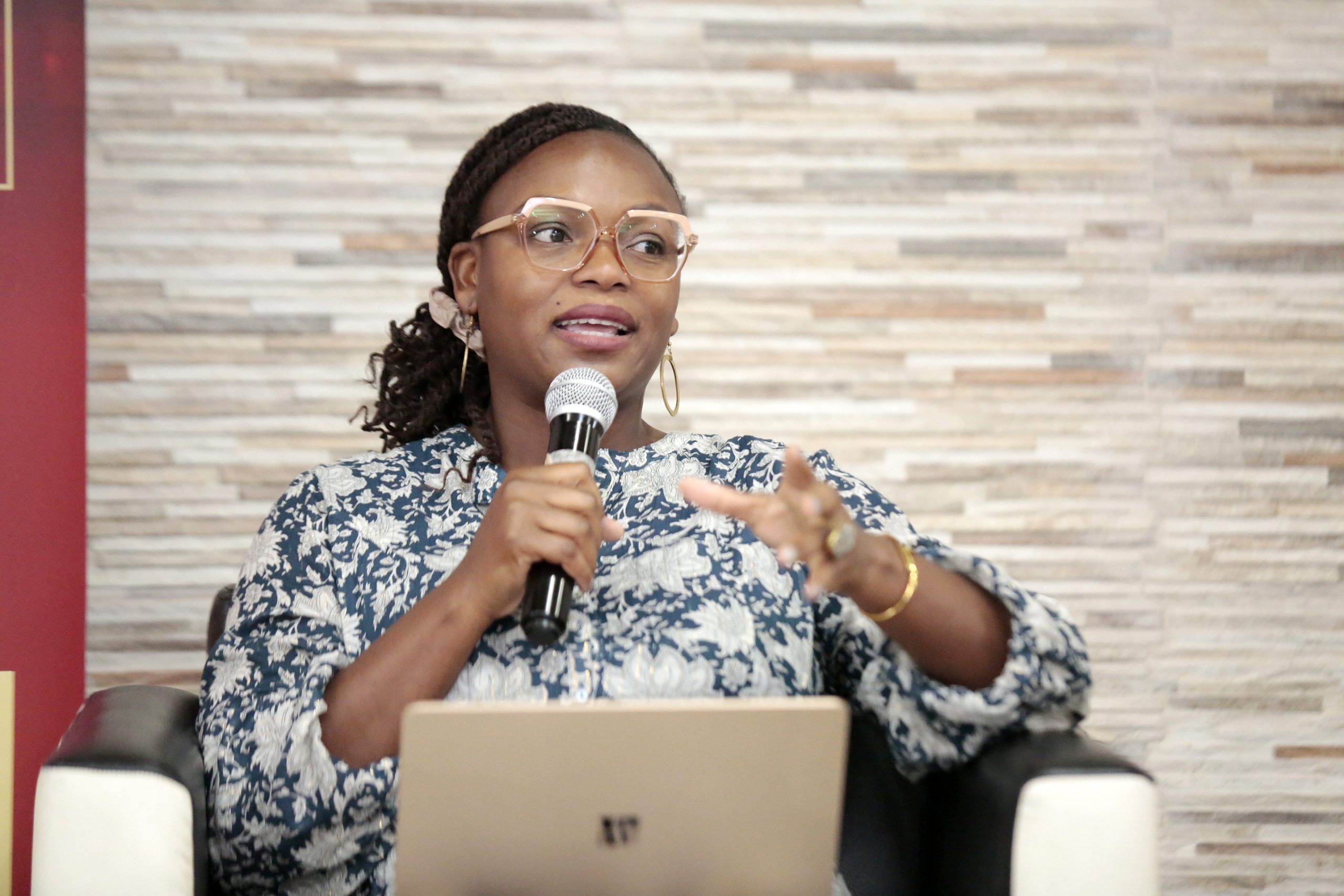
Adejoké Babington-Ashaye
Dr Adejoké Babington-Ashaye, International Law Expert with a focus on accountability for sexual and gender-based violence spoke about the importance of thinking beyond traditional accountability mechanisms, be strategic and use other measures such as sanctions which can have a cumulative effect of stopping or at least diminishing the ability to continue committing crimes.
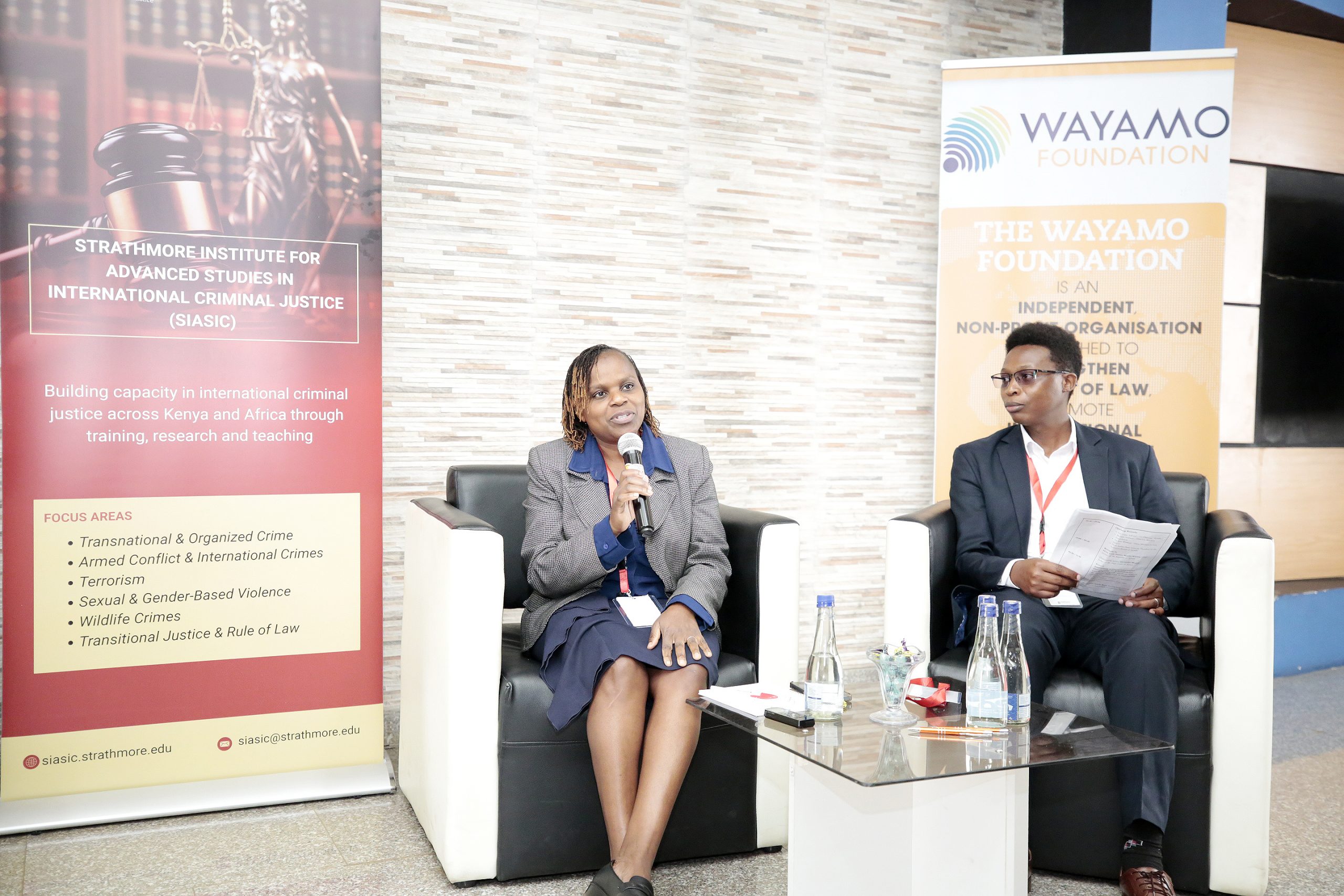
Evelyne Asaala, Joe Kilonzo
The symposium was closed by Bettina Ambach and Dr. Joe Kilonzo, Co-director of SIASIC.
In closing, Ambach expressed the hope that the day’s deliberations would revive momentum toward the establishment of an International Crimes Division of the High Court. She also reiterated that many of the discussions had shown that the future of prosecuting international crimes increasingly lay at the national level. It had become clear that peer exchange was crucial for learning from existing International Crimes Divisions and that challenges remained in creating the political will for their establishment and success.
“The pursuit of accountability for international crimes—especially in ongoing conflicts—should be a creative endeavour, one that explores different mechanisms at the international, regional, and national levels, using innovative tools, legal regimes, and actions to achieve some measure of justice,” she said.
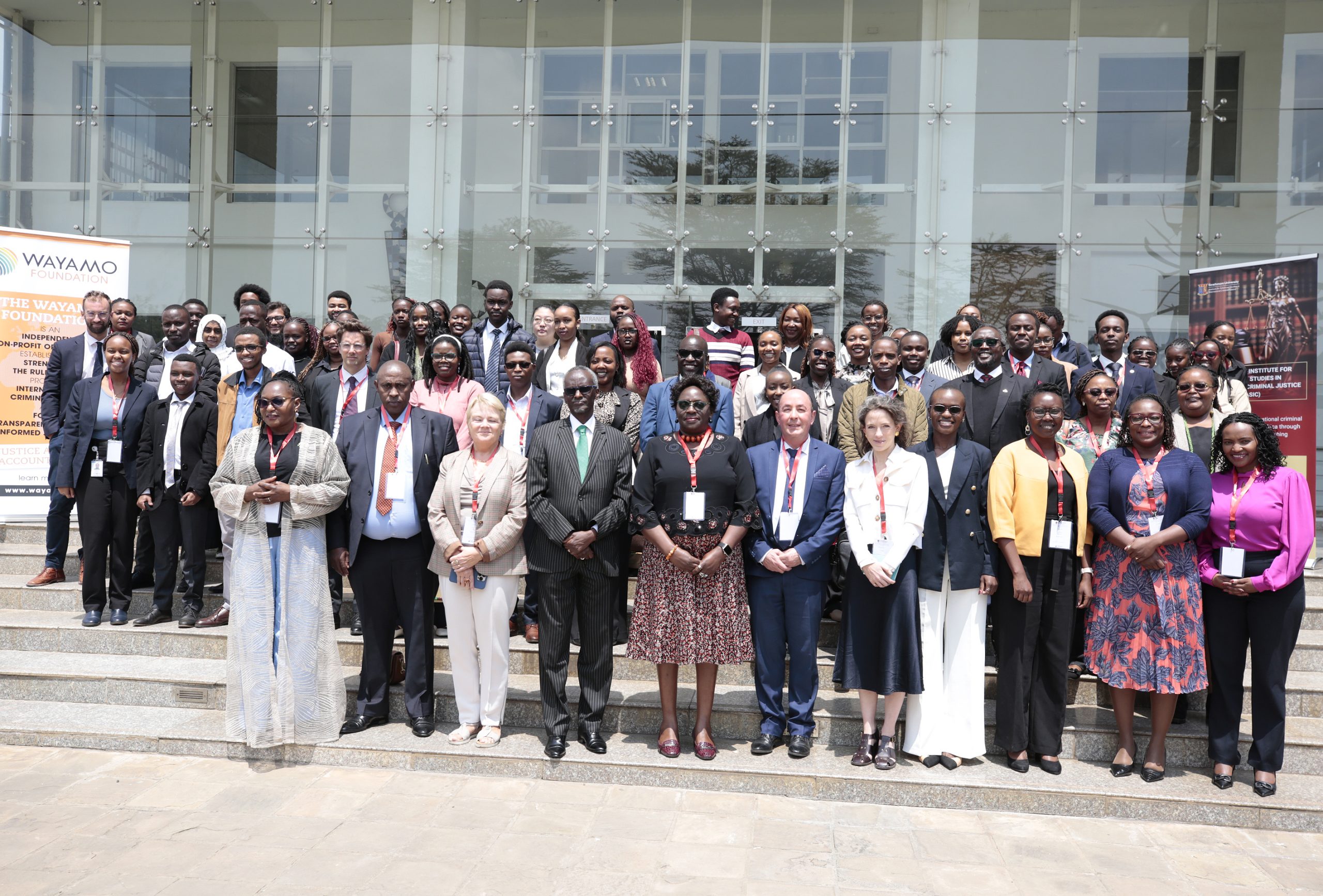
Wayamo SIASIC Symposium September 2025.
