
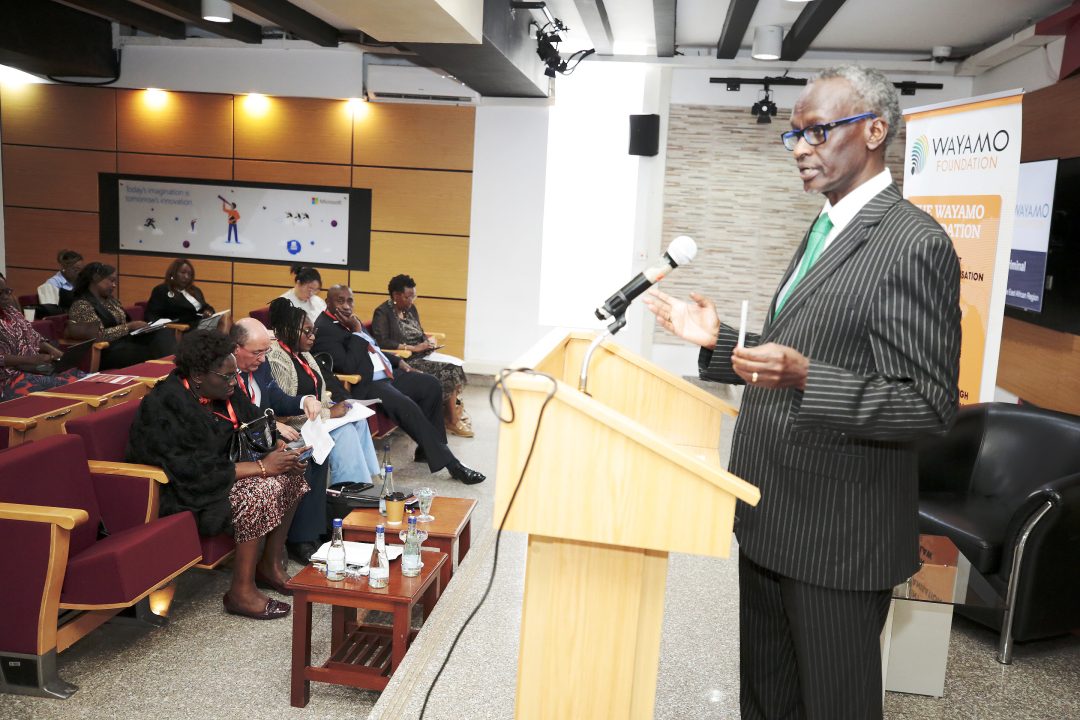
On 2 September 2025, Wayamo co-hosted an international symposium in Nairobi, Kenya along with the Strathmore Institute for Advanced Studies in International Criminal Justice (SIASIC). Held at Nairobi’s Strathmore University, the symposium on “Appraising International Criminal Justice in Africa” brought together judges, prosecutors, legal scholars, civil society experts, and international practitioners who focused on the challenges and opportunities for advancing justice efforts for international crimes in Kenya, and in the region.
The event was covered widely in the Kenyan press, with Supreme Court Justice Isaac Lenaloa telling Citizen TV about the impediments to accountability still present in Kenya’s judicial processes while Wayamo Director Bettina Ambach highlighted the crucial role of civil society and media in the pursuit of justice.
Meanwhile, reporter Dzuya Walter from Citizen Online focused her report on Kenya’s Chief Justice Martha Koome whose message to the audience stressed that the country’s courts are ready to confront the most serious crimes under international law.
The report also highlighted Lenaloa’s challenge to African states to confront international criminal justice with courage, noting the paradox that while African cases dominate the International Criminal Court (ICC) docket, African voices remain underrepresented in shaping international criminal law.
“The solution is not abandonment of this body of law, but reinvigorated engagement,” Lenaola said, urging stronger domestic frameworks.
He also pointed to challenges such as political interference, inadequate funding, and the safety of victims and witnesses, but also underscored Kenya’s Baby Pendo case—currently being prosecuted under Kenya’s landmark International Crimes Act—as a precedent-setting moment.
Gordon Osen from Kenya’s Star newspaper focused his report on calls from judicial experts for a dedicated international crimes division in Kenyan High Court as well as the Chief Justice’s praise for timely discussions around international crimes in the region.
His report also quoted Kenya’s High Court Judge Diana Mochache, who argued that a dedicated division in the High Court would ensure specialised attention to grave crimes and serve as a tool for confronting impunity.
“I’m obsessed with this court. I sleep and dream about this court. I have seen how specialised courts have efficiently dealt with complex issues and ensured deterrence,” she said during a panel discussion.
The report also quoted Uganda’s High Court Judge Susan Okalany, who sits in Uganda’s International Crimes Division, and who suggested that Kenya has fallen behind as a regional leader in jurisprudence by not establishing a similar court.
“If we in Uganda has this division, why not you? You are lagging behind in this area, and there is an urgent need to set it up,” she said.
Finally Reporter Sam Kiplagat from the Nation Media Group reported on the opportunities and challenges facing the judiciary in Kenya, according to both Chief Justice Koome and Justice Lenaola. He also highlighted Bettina’s Ambach comments about the crucial role of political will in establishing a high court division to address international crimes.
