
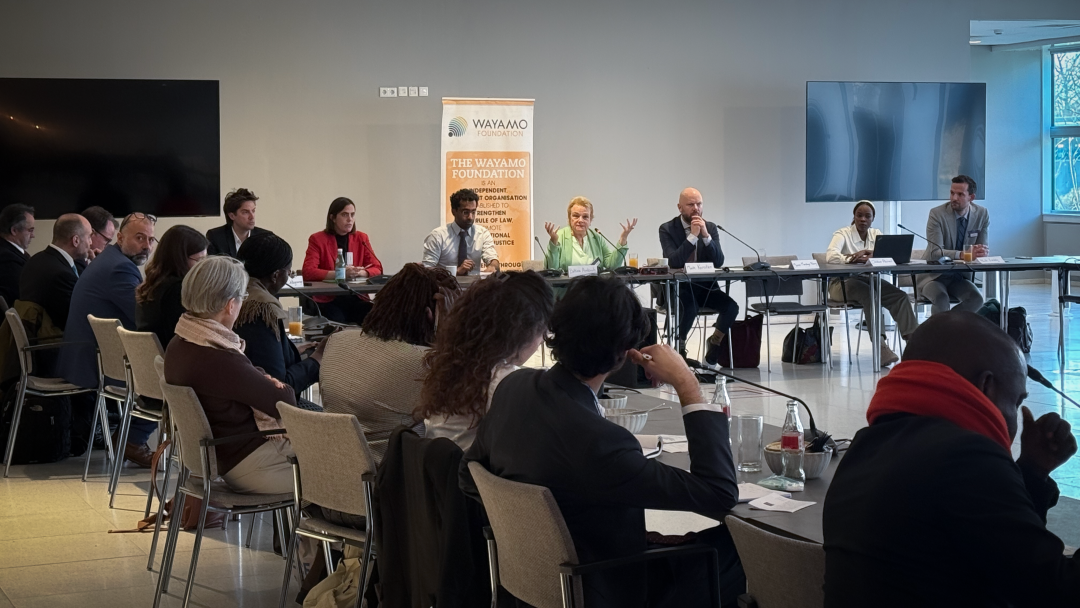
When parts of the ecosystem of international criminal justice are under stress, the creation and fostering of accountability coalitions becomes critical and offers the best opportunity to deliver justice in contexts like Sudan.
This is why Wayamo is dedicated to cultivating and coordinating such coalitions, and why its December 3 side event at the 24th Assembly of States Parties to the International Criminal Court in The Hague focused on highlighting how members of civil society organisations, UN mechanisms and international courts are forging new coalitions to confront atrocity crimes.
“You will always have a partner in the Office of the Prosecutor,” said Mame Mandiaye Niang, Deputy Prosecutor of the ICC who spoke at the event co-hosted by Wayamo with the Foreign Ministries of Germany and Switzerland. “I came here to say how much I value our cooperation in Sudan and elsewhere on the African continent.”
Wayamo Director Bettina Ambach noted the importance of creativity to expand the shrinking space for justice, and acknowledged the presence of four ICC prosecutors at the side event.
“Just like our ongoing four-year project in Sudan, our ICC ASP side event is about showing the importance of coalition building and strategic partnerships to combat impunity in Sudan,” she said.
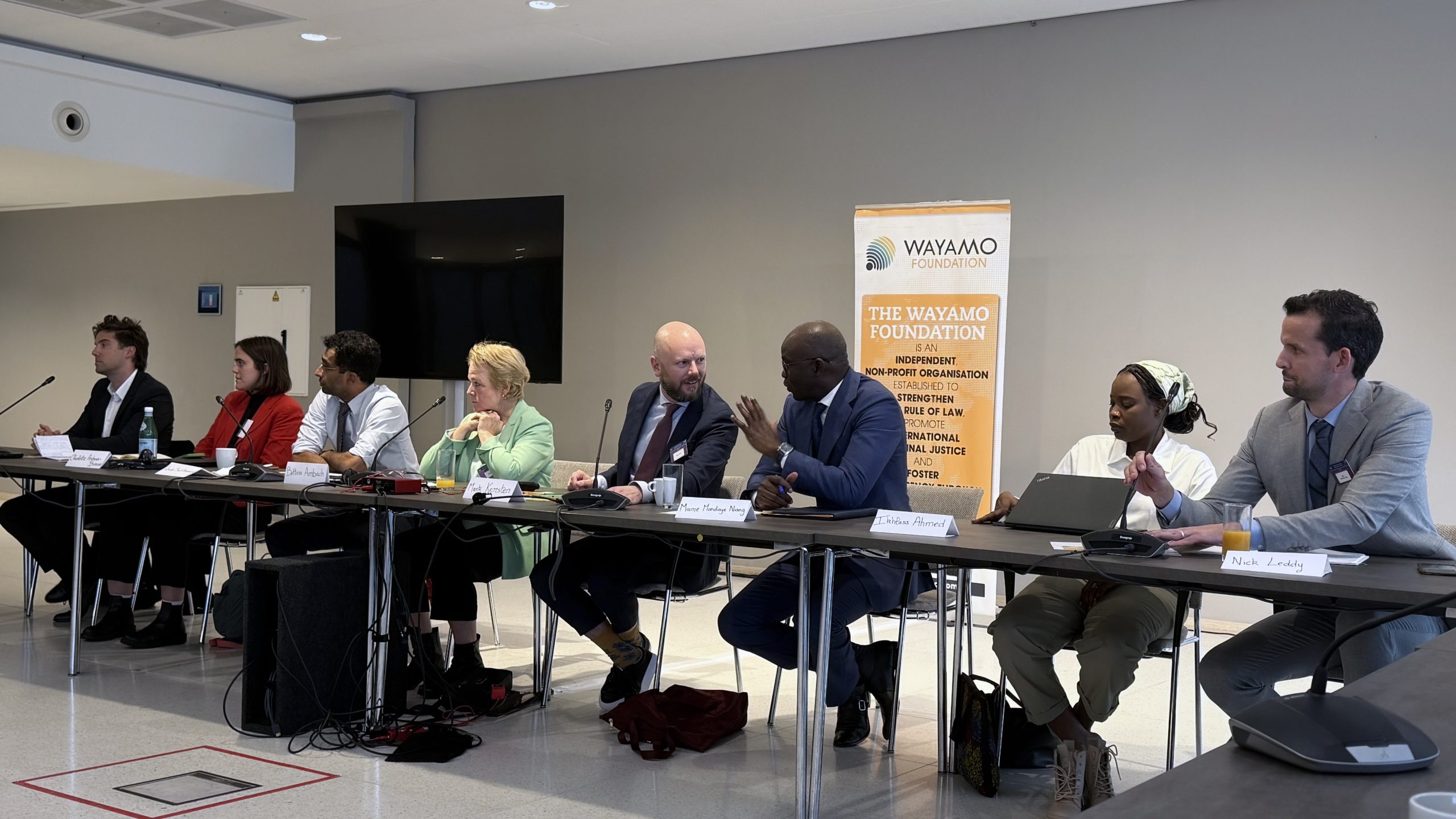
The moderator and Wayamo’s Senior Consultant and Assistant Professor of Criminology and Criminal Justice, University Fraser Valley Mark Kersten opened the discussion noting that “in the current geopolitical situation we have our backs against the wall and in tough times we cannot do the work alone, but that it takes a village to address the magnitude of crimes committed in Sudan.”
Ikhlass Ahmed, from the Strategic Initiative for Women in the Horn of Africa (SIHA) Network, laid out the challenge to the audience assembled in The Hague, deploring that “the international community has walked away from Sudan.”
“What happened in El Fasher in October of this year was foreseeable and predictable, and nothing was done,” she said. “The next massacre may be planned right now.”
She also highlighted the importance of holding perpetrators accountable for their crimes.
“Justice is not a luxury but a necessity,” she added.
Other panelists responded to her challenge, noting that more needs to be done. Charlotte Andrews-Briscoe from Global Legal Action Network (GLAN) spoke about the important role of coalition-building in gathering evidence — such as open-source information and eyewitness testimonies — that can be used in strategic litigation cases related to violent conflicts.
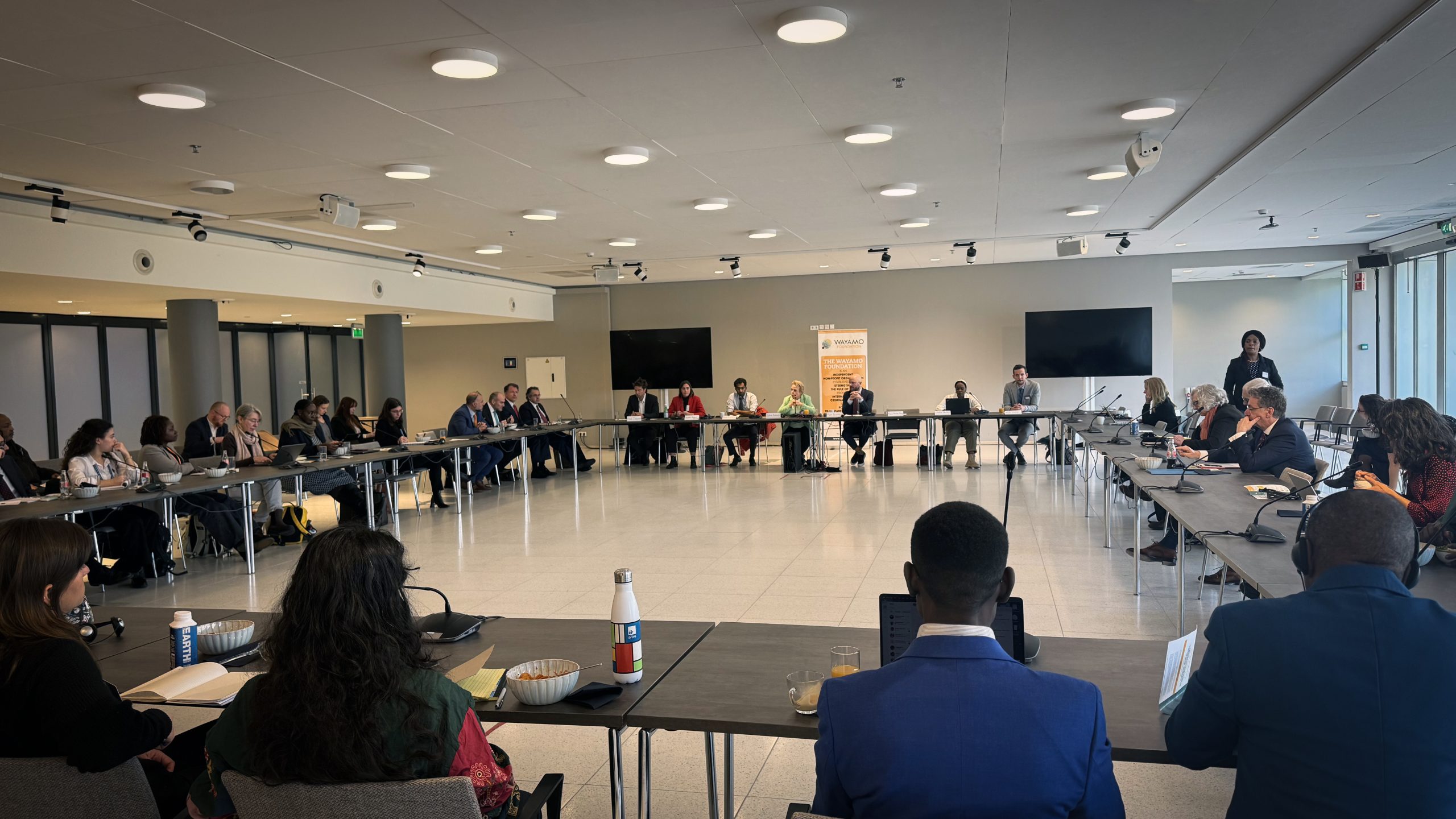
“As a result of our work in Sudan, we filed a legal brief with the OTP regarding crimes committed in Geneina, West Darfur,” said Nick Leddy, Head of Litigation at Legal Action Worldwide (LAW). “Building on our collaborative efforts with Wayamo, we are also exploring the possibility of bringing a universal-jurisdiction case in the region, with the ultimate goal of ensuring there is no safe haven for war criminals.”
Pubudu Sachithanandan, the Head of Unified Team at the Office of the Prosecutor at the International Criminal Court encouraged the collaborative approach.
“The OTP has limited resources and we are in front of massive criminality in Sudan,” he said. “Cooperation, building relationships and sharing information amongst the justice actors is essential and can be mutually beneficial. Universal jurisdiction efforts, UN and ICC are not competing efforts, but we are working towards a common goal.”
Mikel Delagrange, Senior International Legal Advisor, Wayamo Foundation, reiterated the importance of professional and ethical documentation of human rights violations in Sudan which lies at the core of all justice efforts, regardless of venue.
“Over two years of working with a network of Sudanese documenters, they have demonstrated their ability to carry out documentation for accountability, in addition to their advocacy work,” he said. “Together with our partners from international courts, strategic litigation actors and UN mechanisms, we developed a screening process designed not to interfere with future accountability efforts, but to strengthen and support them.”
Moderator Mark Kersten concluded by describing the event as a journey — from the devastating testimony provided by Ikhlass Ahmed at the beginning to the recognition that, without action, impunity breeds further atrocities, and that only a coalition of justice actors can confront the magnitude of the crimes currently being committed in Sudan.
